



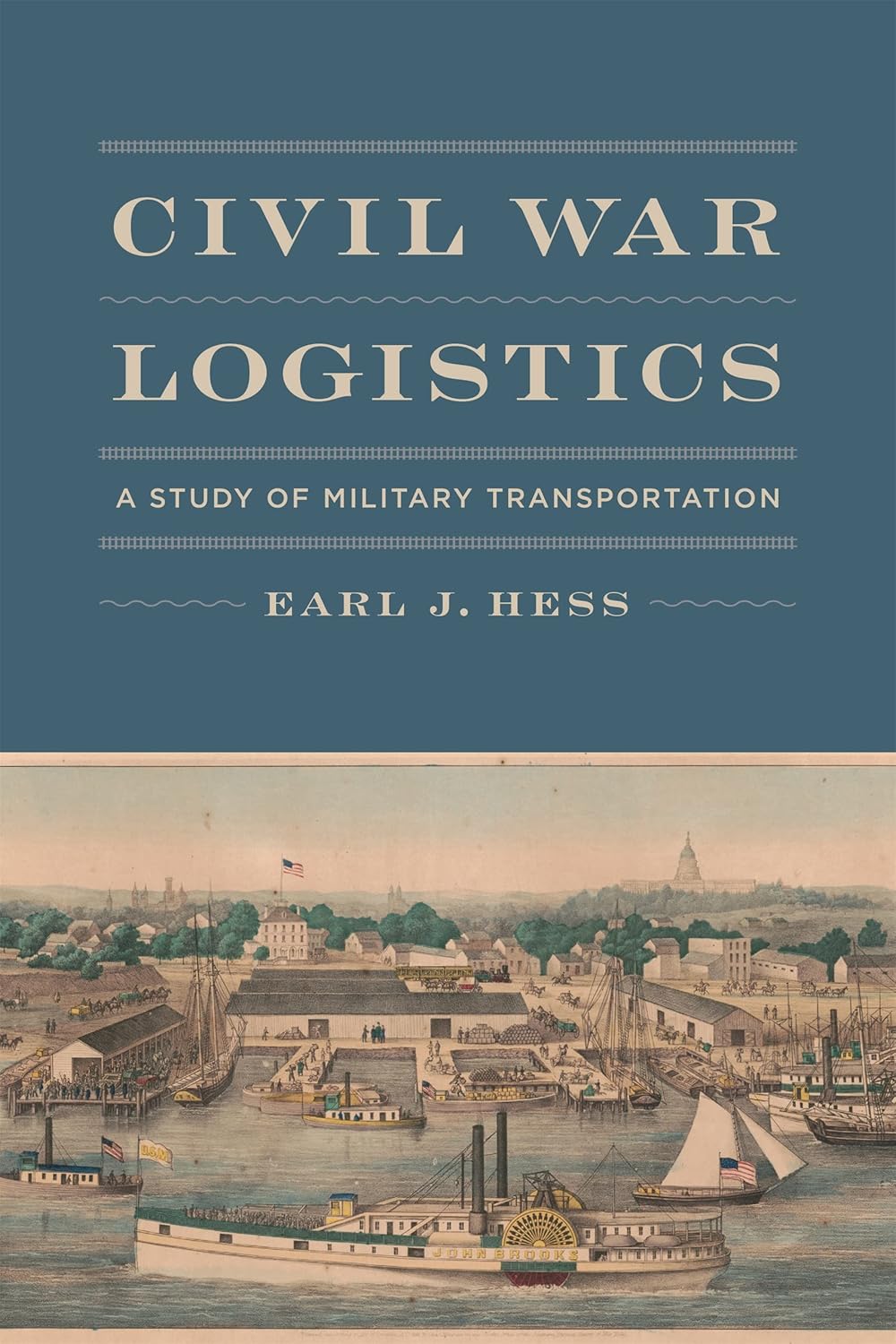
Civil War Logistics: A Study of Military Transportation

 4.1 (122 items)
 Limited Time Sale
US$14.38 cheaper than the new price!!
Free cash-on-delivery fees for purchases over $99
Product details
| Management number | 231639893 | Release Date | 2026/06/18 | List Price | US$9.58 | Model Number | 231639893 | ||
|---|---|---|---|---|---|---|---|---|---|
| Category | |||||||||
Winner of the Eugene Feit Award in Civil War Studies by the New York Military Affairs Symposium During the Civil War, neither the Union nor the Confederate army could have operated without effective transportation systems. Moving men, supplies, and equipment required coordination on a massive scale, and Earl J. Hess’s Civil War Logistics offers the first comprehensive analysis of this vital process. Utilizing an enormous array of reports, dispatches, and personal accounts by quartermasters involved in transporting war materials, Hess reveals how each conveyance system operated as well as the degree to which both armies accomplished their logistical goals.In a society just realizing the benefits of modern travel technology, both sides of the conflict faced challenges in maintaining national and regional lines of transportation. Union and Confederate quartermasters used riverboats, steamers, coastal shipping, railroads, wagon trains, pack trains, cattle herds, and their soldiers in the long and complicated chain that supported the military operations of their forces. Soldiers in blue and gray alike tried to destroy the transportation facilities of their enemy, firing on river boats and dismantling rails to disrupt opposing supply lines while defending their own means of transport.According to Hess, Union logistical efforts proved far more successful than Confederate attempts to move and supply its fighting forces, due mainly to the North’s superior administrative management and willingness to seize transportation resources when needed. As the war went on, the Union’s protean system grew in complexity, size, and efficiency, while that of the Confederates steadily declined in size and effectiveness until it hardly met the needs of its army. Indeed, Hess concludes that in its use of all types of military transportation, the Federal government far surpassed its opponent and thus laid the foundation for Union victory in the Civil War. Read more
Bestseller ranking
Confederacy


Customers who viewed this product also viewed
Culture Tubes




Correction of product information
If you notice any omissions or errors in the product information on this page, please use the correction request form below.
Correction Request Form