



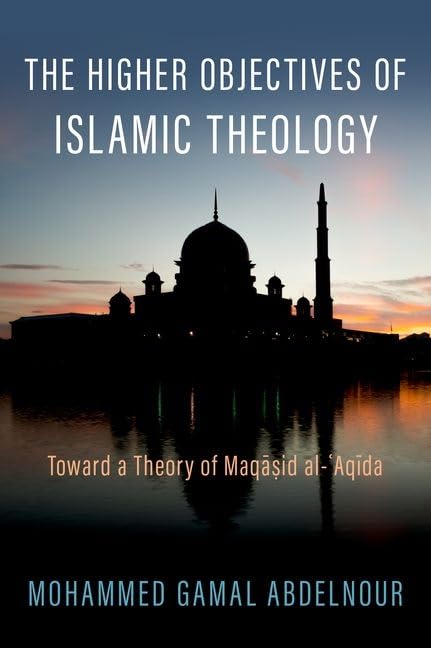
The Higher Objectives of Islamic Theology: Toward a Theory of Maqasid al-Aqida (AAR REFLECTION AND THEORY STU RELIGION)
 5.0 (116 items)
 Limited Time Sale
US$25.53 cheaper than the new price!!
Free cash-on-delivery fees for purchases over $99
Product details
| Management number | 232022701 | Release Date | 2026/06/18 | List Price | US$17.02 | Model Number | 232022701 | ||
|---|---|---|---|---|---|---|---|---|---|
| Category | |||||||||
In the Islamic tradition, fiqh (Islamic law) is generally regarded as the science of furū'al-dīn (matters complementary to the Islamic faith), as opposed to kalām (Islamic theology) which is known as the science of uṣūl al-dīn (matters primary to the Islamic faith). Over time, however, fiqh has significantly surpassed Kalām in terms of cognitive maturation and epistemic development. In The Higher Objectives of Islamic Theology, Mohammed Gamal Abdelnour argues that far too little attention has been paid to parallel developments in Islamic theology. Consequently, the theological project in the Islamic tradition has largely become limited to definitions and deliberations about the nature and qualities of the transcendent God, and has barely developed as a systematic discipline devoted to the higher objectives of Islamic theology, similar to those of Maqāṣid al-Sharī?a (higher objectives of Islamic law).Addressing this gap and drawing on the full-fledged genre of Maqāṣid al-Sharī?a, this study aims to develop a genre of Maqāṣid al-?Aqīda (higher objectives of Islamic theology) based on a scheme of core values (Truth, Justice, Beauty), instead of a scheme of ḥudūd (penalties). Arguing that the tradition's current overemphasis on law (Justice) has relegated both theology (Truth) and Sufism (Beauty) to the periphery of the tradition, Abdelnour illustrates how this marginalisation of theology and Sufism leaves less room for an "ethical Islam" and instead prioritises "legal" and "political Islam." In shifting the focus from law to theology, the book thereby grapples with such questions as: why did Islamic theology fail to develop a systemic genre of Maqāṣid al-?Aqīda? How do we chart out a map to guide the process of founding such an area? In what ways can the emerging Maqāṣid al-?Aqīda benefit from the well-established Maqāṣid al-Sharī?a? What are the ramifications of having an underdeveloped theology? Read more
| ISBN10 | 0197648630 |
|---|---|
| ISBN13 | 978-0197648636 |
| Language | English |
| Publisher | Oxford University Press |
| Dimensions | 9.43 x 0.76 x 6.43 inches |
| Item Weight | 2.31 pounds |
| Print length | 192 pages |
| Publication date | November 4, 2022 |
Bestseller ranking
Noxzema


Customers who viewed this product also viewed
History





Correction of product information
If you notice any omissions or errors in the product information on this page, please use the correction request form below.
Correction Request Form